Insulation Job Costing Guide for Insulation installers Knowledge Base
Understand every dollar going into your insulation jobs. This guide helps insulation installers track labor, materials, and overhead accurately.
What Is Job Costing and Why Should Insulation installers Care
Job costing is the practice of tracking every expense associated with a specific job, including materials, labor, equipment, subcontractors, and overhead. For insulation contractors, it is the difference between knowing you are profitable and hoping you are profitable. Without job costing, you have revenue numbers but no idea which jobs are making money and which ones are eating your margin.
Many insulation installers look at their bank balance or monthly profit and loss statement and assume they are doing fine. But aggregate numbers hide the details. You might have three jobs that made great money and two that lost money, and the average looks okay. Job costing reveals the truth at the individual project level so you can make better decisions going forward.
Track Material Costs Per Job
For insulation work, materials like fiberglass batts, spray foam chemicals, and vapor barriers and sealant are typically a significant portion of your job cost. Every purchase for a job should be tagged to that specific project. This is not just for accounting purposes. It tells you whether your material estimates are accurate, whether you are experiencing waste or theft, and how material costs fluctuate between similar jobs.
If you are working on a commercial building envelope insulation project, the material cost might be very different from a full attic insulation upgrade even if the square footage is similar. Tracking materials at the job level helps you understand these differences and price future work more accurately.
Track Labor Hours Accurately
Labor is usually the largest and hardest-to-control cost on insulation jobs. Tracking labor hours per job means knowing exactly how long each crew member spent on a specific project, including travel time, setup, and cleanup. Without this data, your labor estimates are educated guesses at best.
Encourage your team to log their time daily. Even a simple time tracking system is better than nothing. Over time, this data tells you which types of insulation jobs are most labor-intensive, which crew members are most efficient, and where you consistently underestimate hours.
Include Overhead in Your Job Cost Calculation
It is easy to forget that every job needs to contribute to your overhead costs. Insurance, vehicle expenses, tool replacement, office costs, and software subscriptions do not disappear when you are on a job site. A common approach is to calculate your annual overhead and allocate it proportionally across your jobs based on labor hours or revenue.
- Calculate your monthly overhead including insurance, vehicles, tools, and office costs
- Divide overhead by total expected labor hours to find your overhead rate per hour
- Add the overhead allocation to each job alongside direct material and labor costs
- Review overhead allocation quarterly and adjust as your business changes
Compare Estimated vs Actual on Every Job
The real power of job costing comes from comparing what you estimated against what actually happened. Did the materials for a full attic insulation upgrade come in on budget? Were labor hours within range? Did any unexpected costs arise? This comparison reveals your estimating accuracy and highlights where adjustments are needed.
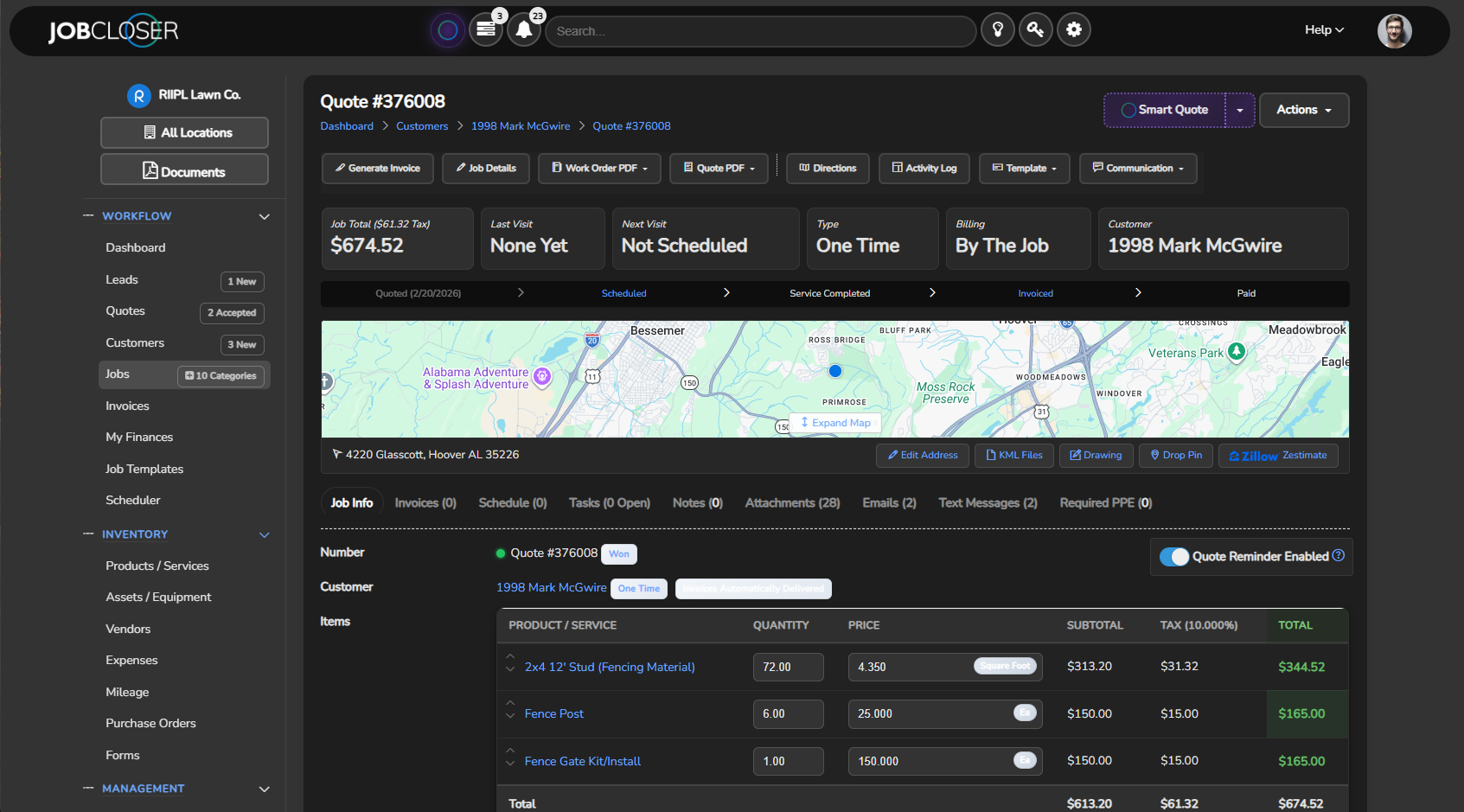
JobCloser gives insulation contractors a complete job costing system that tracks materials, labor, and expenses at the individual job level. You can see estimated versus actual cost and profit for every project right from your dashboard. That visibility transforms how you bid, how you manage jobs, and how you grow your profits over time.
Start Tracking What Matters
Job costing is not complicated, but it does require discipline. Start tracking today and within a few months you will have data that fundamentally changes how you price and manage your insulation business. Get started with JobCloser and turn every project into a learning opportunity that makes the next one more profitable.
Thin margins kill insulation businesses. Learn how to identify profit leaks and improve your bottom line on every project.
Learn how to track estimated versus actual costs on insulation jobs so you can improve future bids and protect profitability.
Winning more insulation jobs starts with better lead management. Learn how to track, nurture, and convert leads into booked work.
Not all CRMs are built for field service. Discover the features insulation installers actually need to manage customers and grow revenue.


More JobCloser
Field Service Mobile Apps
Run your field service business from anywhere. JobCloser mobile apps help your team manage quotes, schedules, jobs, invoices, payments, and customer updates directly from the field.


Try JobCloser Free
Field service management software with quoting, scheduling, invoicing, payments, CRM, and built-in AI. No credit card required. Cancel any time.
Start Free Trial