Comparing Estimated vs Actual Costs on Siding Jobs Knowledge Base
Learn how to track estimated versus actual costs on siding jobs so you can improve future bids and protect profitability.
The Power of Estimated vs Actual Analysis for Siding installers
Every siding job starts with an estimate. Materials, labor, subcontractors, and other costs are projected before the first day of work. But how often do you go back and check whether your estimate was right? For most siding contractors, the answer is rarely or never. That is a problem, because the gap between estimated and actual cost is where profit is either made or lost.
Estimated versus actual analysis is the practice of comparing your pre-job projections with post-job reality. It reveals how accurate your bidding process is, which cost categories you consistently underestimate or overestimate, and where your profit is actually coming from. It is one of the most powerful tools any siding installer can use to improve their business.
Why the Gap Between Estimated and Actual Matters
If your estimates are consistently lower than actual costs, you are underbidding jobs. Every job you complete at a loss or at a thinner-than-expected margin weakens your business. On the other hand, if your estimates are consistently higher than actual costs, you might be pricing yourself out of work you could profitably win. The goal is to close the gap and make your estimates reliable predictors of reality.
For siding jobs where discovering rot or sheathing damage under old siding is a factor, actual costs often diverge from estimates in unpredictable ways. By tracking these variances, you learn to build better contingencies into your bids and reduce the surprise factor on future projects.
What to Compare: Cost Categories That Matter
The most useful estimated vs actual comparisons break costs down by category. Do not just compare total cost. Look at materials separately from labor, and look at labor separately from overhead and subcontractor costs. This granularity tells you exactly where your estimates are off.
- Material cost: Did vinyl siding panels, fiber cement boards, and other materials come in on budget?
- Labor hours: Did the crew finish in the estimated time or go over?
- Overhead: Were there unexpected expenses like extra equipment rentals or permits?
- Subcontractor costs: Did any trade partners charge more than quoted?
- Total profit: Did the job hit your target margin or fall short?
How to Build This Into Your Workflow
The biggest barrier to estimated vs actual analysis is not complexity. It is consistency. You need a system that makes it easy to log costs during the job and compare them against the estimate afterward. If tracking costs feels like extra paperwork, it will not get done. The system needs to be part of how you run the job, not an afterthought.
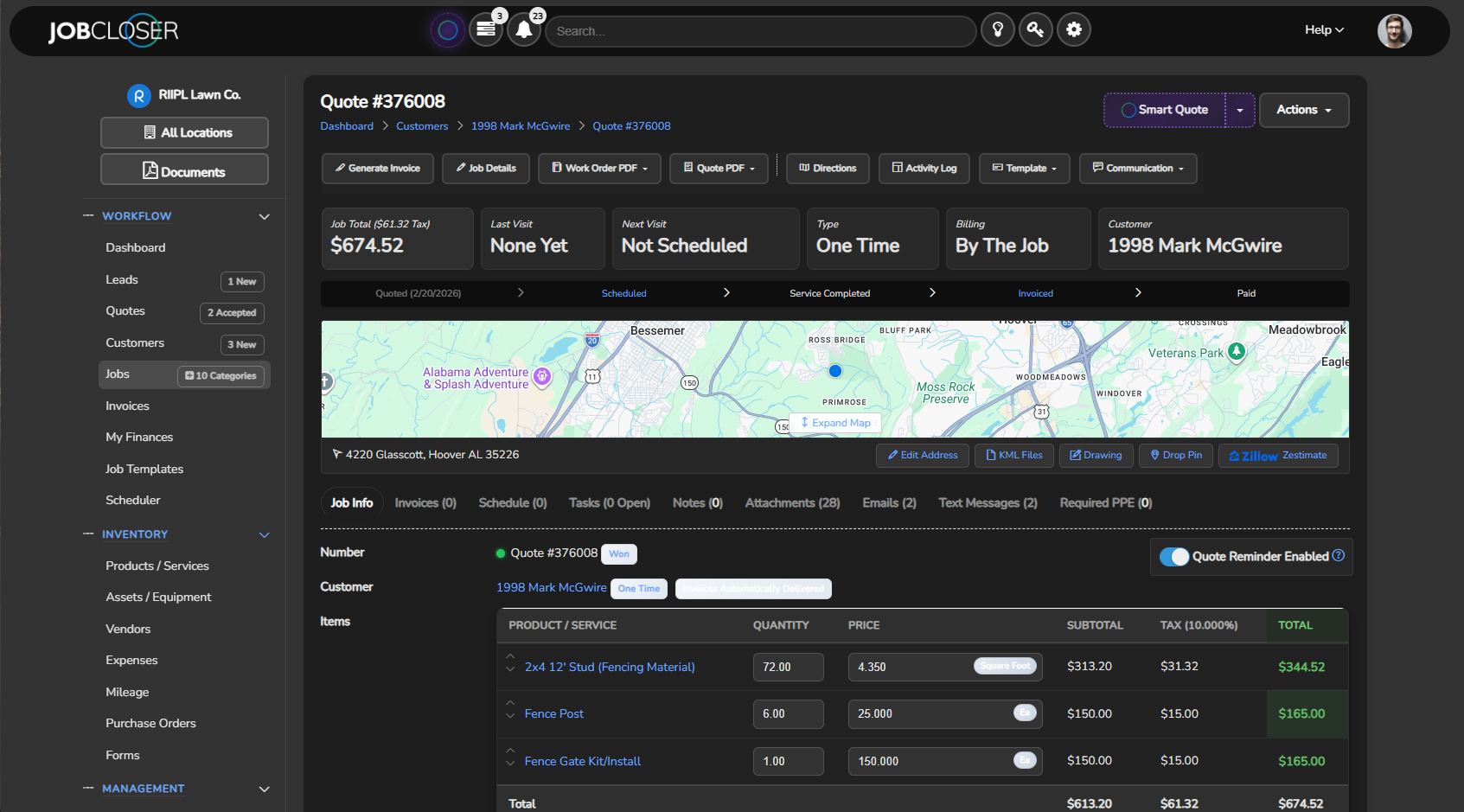
For a project like a whole-house vinyl siding replacement, start by entering your estimated materials and labor hours when you build the quote. As the job progresses, log material purchases and crew hours. When the job is complete, review the comparison. This takes minutes but provides insights that can improve every future bid.
Turning Data Into Better Bids
After you have completed ten, twenty, or fifty siding jobs with estimated vs actual tracking, you will start to see clear patterns. Maybe your material estimates for vinyl siding installation are consistently five percent low. Maybe your labor estimates for fiber cement siding installation are right on target. These patterns tell you exactly where to adjust your estimating process.
JobCloser makes estimated versus actual analysis effortless for siding contractors. Every quote you build becomes a baseline. As you track costs during the job, JobCloser calculates your estimated vs actual variance automatically. You can see it per job, per cost category, and across your entire business. It is the feedback loop that turns experience into accuracy.
Start Measuring What Matters
You cannot improve what you do not measure. Start comparing estimated versus actual costs on every siding job and watch your bidding accuracy, your margins, and your confidence grow. Sign up for JobCloser today and get the visibility that separates profitable siding contractors from everyone else.
Winning more siding jobs starts with better lead management. Learn how to track, nurture, and convert leads into booked work.
Not all CRMs are built for field service. Discover the features siding installers actually need to manage customers and grow revenue.
Great communication wins repeat business. Learn how siding contractors can keep customers informed and build lasting trust.
Missed appointments cost money. Discover practical strategies to reduce no-shows and keep your siding schedule full and productive.


More JobCloser
Field Service Mobile Apps
Run your field service business from anywhere. JobCloser mobile apps help your team manage quotes, schedules, jobs, invoices, payments, and customer updates directly from the field.


Try JobCloser Free
Field service management software with quoting, scheduling, invoicing, payments, CRM, and built-in AI. No credit card required. Cancel any time.
Start Free Trial