Common Plumbing Estimating Mistakes That Hurt Profit Knowledge Base
Discover the most common plumbing estimating mistakes and learn how to fix them before they eat into your bottom line.
Why Estimating Mistakes Are So Costly for Plumbers
Every plumbing job starts with an estimate, and the accuracy of that estimate determines whether the project will be profitable or not. A small mistake on a single bid might not sink your business, but when estimating errors happen consistently across dozens of jobs, the cumulative impact on your bottom line can be devastating. Understanding the most common mistakes is the first step toward eliminating them.
The reality is that most plumbing contractors do not lose money because they do bad work. They lose money because their bids do not reflect the true cost of the work. Closing that gap between what you quote and what a job actually costs is one of the highest-leverage improvements you can make in your business.
Mistake: Underestimating Labor Hours
Labor is typically the largest cost component on any plumbing job, and it is also the hardest to estimate accurately. Many plumbers estimate labor based on best-case scenarios without accounting for realistic complications. A project like a whole-house repipe always takes longer than you think when you factor in setup, cleanup, travel, breaks, and the inevitable problem-solving that happens on every job site.
The fix is to track actual labor hours on every job and compare them against your estimates. After twenty or thirty jobs, you will have solid data on how long specific types of work actually take. That historical data is worth more than any rule of thumb you will find online.
Mistake: Ignoring Overhead in Your Bids
Materials and labor are the obvious costs, but your business has expenses that exist whether you are on a job site or not. Insurance, vehicle payments, fuel, tools, software, phone bills, and accounting fees all need to be covered by the work you do. Many plumbing contractors skip overhead in their bids and then wonder why their revenue does not translate into cash in the bank.
A good rule of thumb is to calculate your annual overhead, divide it by the number of billable hours you expect, and add that hourly overhead rate to every estimate. This ensures every job contributes to keeping the lights on, not just covering the direct costs of the work itself.
Mistake: Not Accounting for Hidden damage behind walls that changes scope
This one catches plumbers off guard regularly. The challenge of hidden damage behind walls that changes scope is unique to the plumbing industry and can dramatically change the scope and cost of a project. If your estimates do not include a realistic allowance for this factor, you will absorb the extra cost and your margin will suffer. Build a contingency line item into your estimates so you are covered when surprises happen.
Mistake: Copying Competitor Pricing
It is tempting to price your plumbing services based on what competitors charge, but this is a dangerous strategy. You have no idea what their cost structure looks like, whether they are actually profitable, or whether they are even accounting for all their expenses. Their low price might be the reason they go out of business next year. Your pricing needs to be based on your costs, your overhead, and your profit targets.
The plumbing market in your area might support a rate of X per fixture or per project, but if that rate does not cover your fully loaded costs plus a reasonable profit, then you need to differentiate on value rather than competing on price alone. Homeowners, property managers, and general contractors will pay more for reliability, quality, and professionalism.
Mistake: Quoting Without a System
The final and arguably most common mistake is not having a repeatable estimating system at all. If every bid is a one-off exercise where you start from scratch, you are wasting time and introducing inconsistency. Build templates, use checklists, and track your results so that every estimate benefits from the ones that came before it.
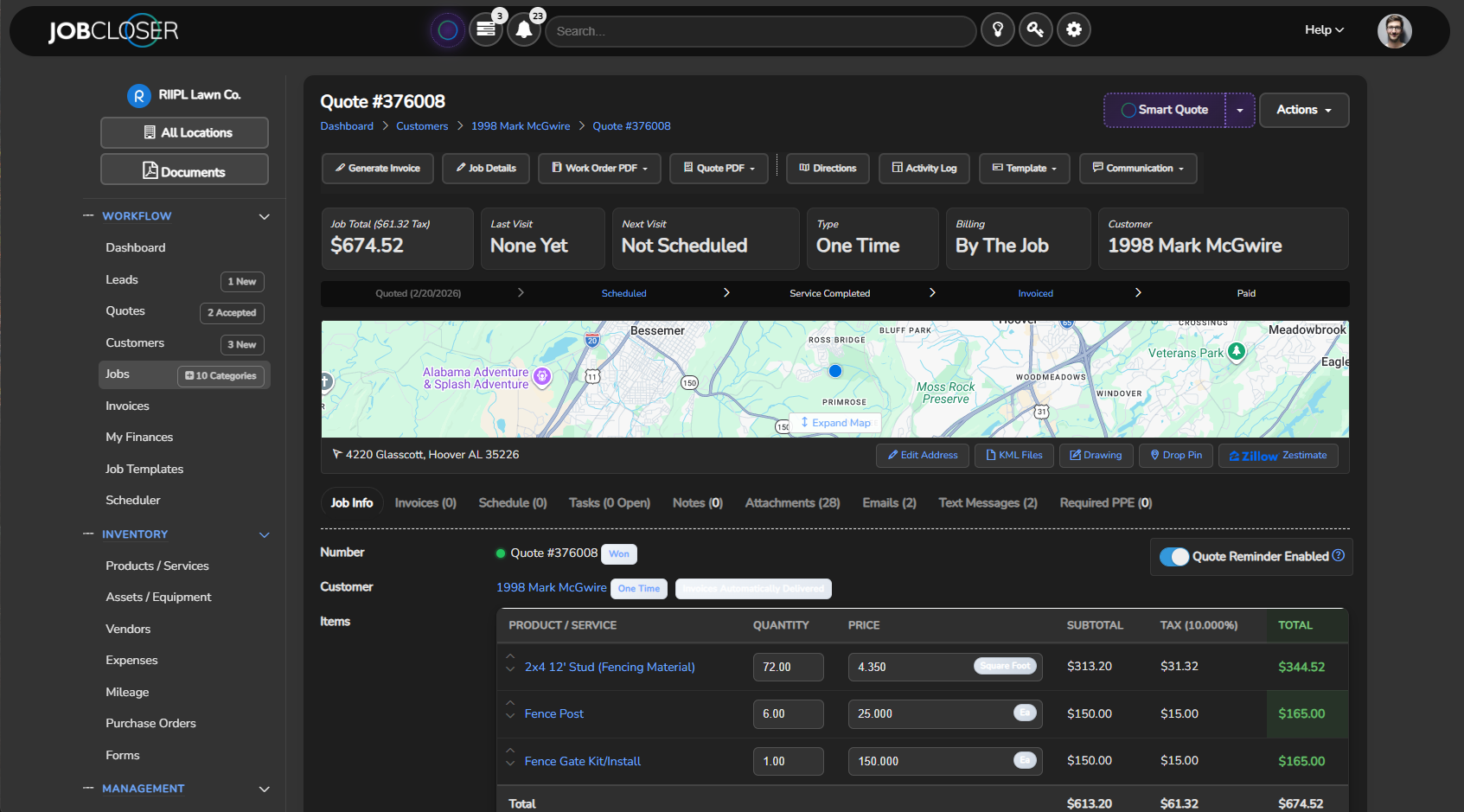
JobCloser helps plumbing contractors build professional estimates using structured templates, track costs on every job, and compare estimated versus actual results. Over time, your bids get more accurate and your profits get more predictable. Combine that with Orbit AI Smart Quoting to speed up the process even further, and you have a system that turns estimating from a weakness into a competitive advantage.
Stop Leaving Money on the Table
Estimating does not have to be a guessing game. Track your numbers, learn from every job, and build a system that improves over time. Try JobCloser today and see how a data-driven approach to estimating can transform the profitability of your plumbing business.
Improve scheduling efficiency for your plumbing business with practical tips that reduce downtime, cut windshield time, and increase daily output.
Follow these invoicing best practices for plumbing contractors to get paid faster and maintain professional client relationships.
Stop chasing payments. Learn actionable strategies that help plumbing contractors collect what they are owed quickly and consistently.
Understand every dollar going into your plumbing jobs. This guide helps plumbers track labor, materials, and overhead accurately.


More JobCloser
Field Service Mobile Apps
Run your field service business from anywhere. JobCloser mobile apps help your team manage quotes, schedules, jobs, invoices, payments, and customer updates directly from the field.


Try JobCloser Free
Field service management software with quoting, scheduling, invoicing, payments, CRM, and built-in AI. No credit card required. Cancel any time.
Start Free Trial